A Deadly New Phase in Pak–Afghan Tensions
Early November brought a grim pair of shocks. A suicide bomber attacked outside a court in Islamabad, and militants mounted a siege at a cadet college in Wana near the Afghan border. The timing, targets, and tactics underlined a sharp escalation of threat vectors tied to sanctuaries and coordination across the Durand Line.
Islamabad’s position hardened accordingly: if an act of terror is rooted in Afghanistan, Pakistan will strike the origin points inside Afghanistan. Kabul’s interim rulers responded with open defiance. The question is no longer whether there is a problem with Taliban-enabled militancy, but what the Taliban can do next, and how quickly Pakistan should prepare for that spectrum of risk.
Afghan-Based Terror, Revived and Reorganized
The security picture has darkened since the Taliban took Kabul in August 2021.
Tehrik-e-Taliban Pakistan (TTP) has recovered, regrouped, and rearmed. Pakistani assessments put TTP’s presence in Afghanistan at roughly 6,000–6,500, with a leadership structure that plans, trains, and directs operations across the frontier. The trend line is unambiguous. Fatalities spiked in 2022–2023. In 2024, the count of terror incidents climbed again, with 444 attacks and a toll of 1,612 deaths, including 685 security personnel. Several mass-casualty events in urban centers reinforced a core reality: the command-and-control nodes, safe houses, and training support sit on Afghan soil, while the operational execution hits Pakistani targets.
An additional change worsens the picture. Pakistani investigations link a rising proportion of attackers to Afghan nationals, a shift from earlier years when such participation had been a small minority. That figure now stands at about 75 percent in recent suicide-bombing series. Meanwhile, roughly $7 billion in equipment abandoned in Afghanistan by foreign forces has filtered into militant hands. Night-vision devices, improved rifles, and optics have raised the lethality of raids against outmatched police stations and checkpoints.
The pattern is clear: Cross-border sanctuary, better kit, and a dependable pipeline of funds from smuggling, extortion, and protection rackets together underpin a higher operational tempo and a more resilient insurgency.
The strategic irony is obvious. Pakistan once invested in the Afghan Taliban on the assumption of maintaining peace on its north-western frontier. The outcome is the opposite. Strong ideological and tribal ties between Afghanistan’s rulers and the TTP now matter more than any past debt to Islamabad. Pakistan is dealing with an armed ecosystem that includes ideological alignment, historical camaraderie, and economic interdependence in the borderlands. That ecosystem is the backbone of the threat.
Doha to Istanbul: Talks That Failed to Bend the Curve
Diplomacy was not ignored. Pakistan and the Taliban met first in Doha (October 18–19, 2025) and then in Istanbul (November 6–7, 2025) seeking a framework to curb TTP activity and reduce frontier friction. A limited ceasefire gesture followed the first round on Oct 19. The second round produced no joint statement, no roadmap, and no confidence-building measures that could endure.
Islamabad asked for verifiable action against TTP leaders and infrastructure, insisting that Kabul was responsible for armed groups operating from Afghan territory. Kabul pushed back, claiming Pakistan was externalizing an internal security problem and insisting Afghanistan lacked the capacity and mandate to police a Pakistani insurgent movement.
Senior-level representation from the Afghan side was thin, and even procedural signals suggested a reluctance to commit. The net effect was negative space. No shared definition of the problem, no shared plan for dismantling cross-border logistics, and no mechanism to monitor implementation. With diplomacy stalled, Pakistan’s declaratory policy moved from persuasion to deterrence, including the option of cross-border strikes.
War of words and Online Intimidation
A rhetorical escalation accompanied the diplomatic breakdown. Minister Noorullah Noori warned Pakistan in rallies, invoking Soviet and US defeats as cautionary tales. The subtext was clear: if conflict expands, Afghan fighters will take it beyond the border. Zabihullah Mujahid amplified this posture, accusing Pakistan of bad faith and shifting blame for the TTP’s resurgence. The narrative sought to reframe the problem as Pakistani perfidy rather than Afghan tolerance of anti-Pakistan militants, echoed by Anas Haqqani and Kabul spokesman Khalid Zadran.
The online ecosystem aligned with the official tone. Taliban-linked accounts such as @Zabehulah_M33, @AnasHaqqani313, and @khalidzadran01, to name a couple, circulated incendiary slogans, taunted Pakistan with #ComingSoonIslamabad, and glorified imagined attacks on cities. The purpose was clear: psychological pressure, intimidation of domestic audiences, and signaling to cadres that Kabul’s leadership would bless escalation if Pakistan used force.
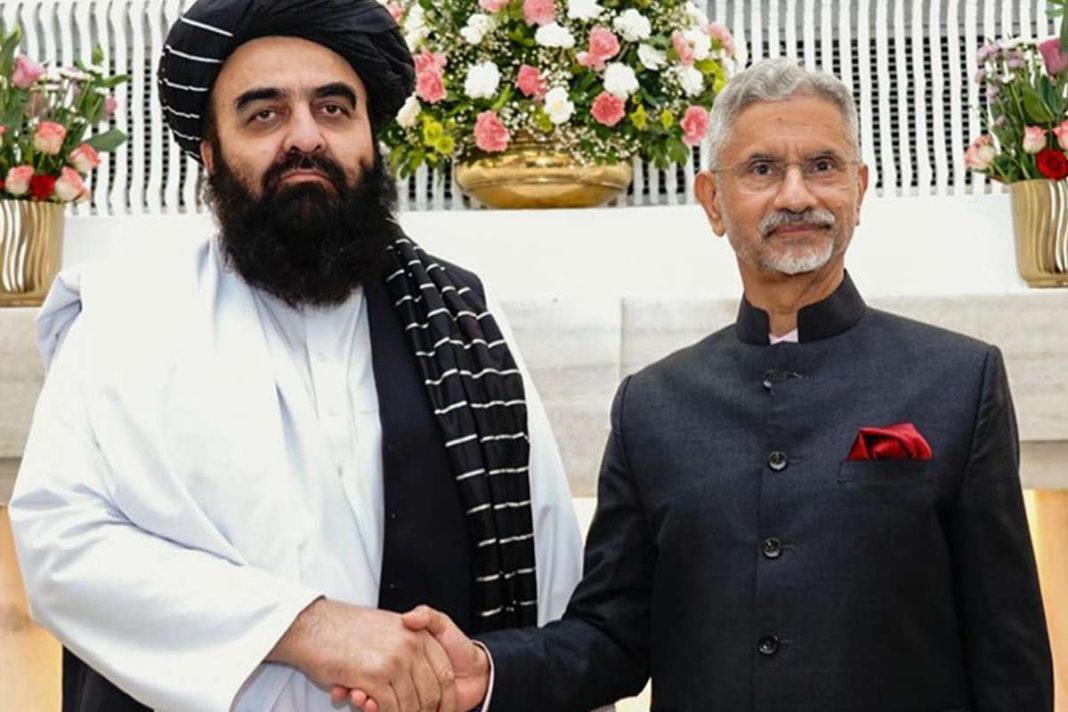
Parallel diplomatic gestures compounded the sting. Taliban outreach to India, including remarks by Amir Khan Muttaqi, is seen as helpful to New Delhi’s Kashmir position, signaling willingness to align with Pakistan’s rivals when expedient. The message to Islamabad was that Afghanistan’s rulers will use every lever to raise Pakistan’s costs.
Six Plausible Taliban Options, Ranked by Severity
What could the Taliban regime actually do to harm Pakistan if tensions worsen? The following six scenarios are distinct but not mutually exclusive. Any combination would stress Pakistan’s security architecture and political cohesion, particularly in the Khyber Pakhtunkhwa province, where a new Chief Minister, Sohail Afridi, appears more interested in playing cricket for TikTok than leading the effort against the TTP terrorists who are butchering police officials, burning schools, and kidnapping government officials.
1. Propaganda and ideological warfare
Expect intensified information operations framing Pakistan as an oppressor of Pashtuns and a violator of Afghan sovereignty. The campaign would question the Durand Line, stoke nationalist sentiment, and recycle imagery of Pakistani humiliation.
The effect would be most significant in border districts already primed by economic hardship and decades of conflict. This is low-cost for Kabul and high-noise for Pakistan. The aim would be to erode trust in state institutions, incite protest cycles, and create sympathetic space for insurgent logistics.
2. Diplomatic alignment against Pakistan
Kabul can deepen ties with Pakistan’s rivals and skeptics. Warmer engagement with India, public statements that cut against Pakistan’s red lines, and outreach to regional formats that exclude Islamabad all serve to isolate Pakistan. Even without formal recognition, the Taliban can trade political gestures for economic access and tacit protection from censure.
The goal would be to reduce international tolerance for Pakistani cross-border responses and to dilute sympathy for Pakistan’s security claims.
3. Harboring and enabling diverse militant proxies
Beyond the TTP, Afghan territory has been a fallback for other anti-Pakistan actors during past cycles of violence. A permissive environment for Baloch separatist factions or sectarian outfits would stretch Pakistani security forces across multiple theaters, from the northwest to Balochistan and urban cores.
Kabul can calibrate deniability, allowing groups to train and transit while disclaiming command. The cost to Afghanistan is minimal if operations are conducted away from major cities; the cost to Pakistan is cumulative strain and distraction.
4. Enhanced support to the TTP insurgency
This is the most probable lever and the fastest to scale. Kabul can facilitate deeper TTP embedment on Afghan soil, training, and logistics. Tacit provision of better weapons and optics, shared tradecraft, and the occasional augmentation of TTP units by Taliban special cadres for key actions would lift the insurgency’s punch. The targets would diversify: police stations at night, ambushes on convoys, and high-visibility strikes in provincial capitals.
The connective tissue is the sanctuary–planning–execution loop, now hardened by years of joint fighting and kinship ties. The outcome would be a sustained tempo that bleeds Pakistan without forcing Kabul to drop the veil of deniability.
5. Border skirmishes and territorial provocation
Short-of-war direct action along the frontier is another option. Afghan units and allied militias could generate pressure through mortar fire, raids on outposts, or attempts to seize small patches of ground to erode Pakistani prestige. The ambition would be to impose friction costs, draw media attention to Afghan resolve, and force Pakistan to disperse forces along a long and rugged border.
The risk for Kabul is escalation against a far better-equipped military, but the propaganda dividend of even a tactical success would be amplified at home and online.
6. Direct conventional or large-scale attack
Least likely but most severe is an open confrontation that abandons deniability.
This could include a coordinated multi-front incursion aimed at overrunning a symbolic border town or a mass-casualty strike in a major Pakistani city intended to shock and awe. The Taliban lack a modern air force and heavy firepower, so they aim for surprise, concentration of manpower, and narrative victory rather than sustained positional warfare.
The gamble would be that Pakistan hesitates to escalate fully, or that international pressure curbs Pakistani retaliation. The risk for Kabul would be catastrophic losses if Islamabad mobilizes, but political leadership under pressure sometimes chooses escalation to reset deterrence or to paper over internal fissures.
What Recent Practice Suggests About Future Risk
The operating pattern over the past three years points toward scenarios three through five (above) as the center of gravity. The TTP’s access to sanctuary, training, and improved weapons has already changed the tactical balance in several districts. Cross-border firing incidents, local captures and recaptures of posts, and coordinated propaganda bursts have moved in lockstep with major attacks. Diplomatic maneuvering has complemented these actions, not replaced them.
The modularity of the approach is intentional.
Kabul raises temperature with words, offers tactical calm in talks, scales violence through proxies, and tests the frontier with deniable skirmishes. The strategy probes for red lines while keeping one layer of distance between Kabul’s officials and battlefield actions.
If Pakistan conducts limited strikes on Afghan soil, expect the Taliban to respond with a bundle: sharper rhetoric, border friction, and a spike in TTP operations facilitated by Afghan enablers.
Suppose Pakistan widens the scope of its actions or shifts from punitive to sustained cross-border actions. In that case, the risk of a short, sharp conventional clash rises, especially where the terrain allows rapid massing of fighters. In either case, the information war will attempt to frame Pakistan as the aggressor and to ignite domestic dissent inside Pakistan’s border regions.
No Illusions, Only a Clear Policy Line
A policy reset is unavoidable. Pakistan must stop treating the Afghan Taliban as a sentimental or strategic extension and must handle them as a separate state actor whose interests frequently cut against Pakistani security. That judgment should guide the use of force, the posture at the border, the terms of any future dialogue, and the tempo of internal hardening against infiltration and logistics pipelines.
Three direct principles follow:
1. Enforce accountability for cross-border aggression through calibrated, lawful, and intelligence-driven action, including strikes on imminent threats when necessary.
2. Reduce vulnerabilities by tightening border control, disrupting financial and logistical networks that feed cross-border militancy, and accelerating the removal of illegal armed elements wherever found.
3. Enlarge external coordination with neighbors and partners who have convergent interests in curbing militant spillover from Afghanistan, while maintaining a disciplined public narrative that focuses on facts and credible evidence.
The domestic corollary is equally clear.
Institutions must coordinate, resource the police and counterterror forces to meet a better-armed insurgency, and sustain public communications that separate communities from armed actors. Pakistan has faced down violent waves before when policy was coherent, evidence-based, and relentless. That is the bar.
The Bottom Line
The Taliban’s interim government has the motive, means, and doctrinal comfort to pressure Pakistan across multiple axes. The six scenarios above are not speculative fantasy; they are grounded in recent practice and in the structure of relationships along the border. Pakistan cannot afford another cycle of hesitation and drift. It needs a stable policy spine, rapid operational readiness for the most likely contingencies, and the discipline to enforce consequences without rhetoric or theatrics. That is the only way to alter the calculus in Kabul and to degrade the cross-border apparatus now aimed at Pakistan.