Mullah Abdul Ghani Baradar’s 12 November instruction to Afghan traders—to wind down commercial ties with Pakistan within three months, find alternative routes, and expect no official cover if they do not—turns border friction into policy. Coming days after talks faltered, it signals that Kabul is ready to weaponize trade to raise Pakistan’s costs. The question is not whether both sides would feel pain; they would. The question is: who is more exposed, and on what time scale?
The bilateral baseline is clear enough. Pakistan’s exports to Afghanistan rose from about $0.85 billion in 2020 to roughly $1.14 billion in 2024, while Pakistan’s imports from Afghanistan peaked near $0.88 billion in 2023 before easing to about $0.57 billion in 2024. That puts the total two-way trade at around $1.82 billion in 2023 and about $1.71 billion in 2024. Through the first half of 2025, the tally had already crossed $1.0 billion, suggesting that, absent policy shocks, full-year 2025 would have approached or exceeded the 2023 level.
With Baradar’s three-month clock starting mid-November, a reasonable projection is that November–January volumes will weaken. After mid-February 2026, formal flows will fall sharply, while informal leakage will persist. In other words, disruption would bite quickly on the Afghan side and show up more diffusely on the Pakistani side.
Exposure relative to economic size is asymmetric.
Pakistan’s 2024 nominal GDP is about $373 billion; Afghanistan’s 2023 nominal GDP is roughly $17.15 billion. Using the round figures above, the annual Afghanistan–Pakistan merchandise trade of $1.7–1.8 billion equals about 0.45–0.50 percent of Pakistan’s GDP, but roughly 10–11 percent of Afghanistan’s GDP. That is not a direct GDP loss—trade value is not value added—but it is a clean indicator of dependency. Per-capita income underscores the cushion gap: Pakistan’s 2024 GDP per capita is about $1,485; Afghanistan’s 2023 figure is about $414. Shocks are harder to absorb in the smaller, poorer economy.
Routes matter because geography sets costs.
For southern Afghanistan’s farm exporters, the cheapest gate for perishables remains the Spin Boldak–Chaman corridor into Balochistan and onward to Quetta’s markets or Karachi’s ports. Distances tell the story. Kandahar to Quetta is about 215 km. Kandahar to Hairatan (for Uzbekistan via Termez) is roughly 870–900 km across Afghanistan’s spine. Kandahar to Chabahar on Iran’s coast is about 1,180–1,200 km. If one applies an indicative South-Asia road container freight rate near $0.036 per ton-kilometer, a 20-ton truck moving pomegranates from Kandahar to Quetta costs on the order of $155 in line-haul freight; the same truck to Hairatan costs roughly $625; to Chabahar approximately $850—before border, handling, cooling, and time penalties.
Even if these coefficients vary by corridor and season, the direction is unambiguous. The Pakistani route is shorter, cheaper, and faster for southern exporters whose margins are razor-thin and whose produce bruises in queues.
Basic food inputs tell a parallel story. For flour, Peshawar to Kabul is ~233 km, implying a roughly $170 line-haul for a 20-ton truck, plus crossing and security frictions. From Iran’s Bandar Abbas to Kabul via Islam Qala is on the order of 2,300–2,400 km; from Chabahar to Kabul roughly 1,800–2,000 km. Even if Iranian back-haul rates are competitive and railroad intermodal options are available, moving staple foods over those distances adds costs and risk for Afghan buyers, especially given no formal banking channels and cash-settlement frictions.
Medicines are more nuanced. Afghan wholesalers have long sourced pharmaceuticals from both Pakistan and India. Pakistan offers proximity and established private distributor networks; India offers scale and a vast generics base.
After Kabul’s announcement that some imports from Pakistan would be restricted, Afghan authorities clarified that only 52 “unlicensed” items were barred—a narrower curb than the initial rhetoric implied. Even so, rerouting to Indian suppliers via Iran (or via air freight on specific corridors) introduces longer lead times, regulatory uncertainty, and foreign-exchange handling issues for Afghan importers. For high-volume essentials, the price tag includes both unit cost and the financing and logistics premium imposed by longer corridors.
Short-term costs from a formal trade freeze would not be one-sided. Pakistan’s border closures in 2023 triggered immediate price spikes in Pakistani markets; on some days, tomatoes jumped by several hundred percent, and onions doubled. That sensitivity would recur if crossings clog—Pakistan’s trucking fleets and wholesale markets have become accustomed to cross-border seasonality. But the Pakistani economy is larger and more diversified, with alternative sourcing across domestic provinces and seaports.
The Afghan side faces a more concentrated disruption risk because the import mix includes food, fuel, and pharmaceuticals, and Pakistan remains the shortest-distance supplier for a large share of small- and medium-sized traders in the east and south.
The broader trade landscape shows that Afghanistan does have alternatives, but not perfect substitutes. Iran is already a major partner, with Afghan imports from Iran exceeding $1.5 billion in recent years, dominated by energy and industrial inputs. Uzbekistan is the key northern supplier of wheat flour—over $0.26 billion in one recent year—but that reflects specific state-to-state deals and rail logistics, not a blanket replacement for Pakistani corridors. India is Afghanistan’s leading non-neighbor partner for exports and a significant source for pharmaceuticals and consumer goods, yet the practical pathways run through Iran’s ports or limited air corridors. Each non-Pakistan route adds kilometers, time, and transaction complexity.
The politics are not incidental. The 12 November directive came as Afghan officials publicly warned Pakistan not to test their patience and as Taliban-linked online networks amplified nationalist messaging and threats, casting blame for militancy on Islamabad while lauding Kabul’s defiance. In parallel, Kabul signaled diplomatic range by warming rhetoric towards New Delhi, a lever plainly meant to discomfort Pakistan. The strategy is to layer psychological and political pressure on top of logistics friction.
On core economics, however, the calculus remains stubborn. If formal trade is throttled by mid-February 2026, Afghanistan’s traders will pivot as they have before—to Iran’s ports, to northern railheads, to longer trucking loops. They will still move fruit, marble, coal, textiles, medicines, and consumer goods. They will do so at a higher delivered cost, greater inventory risk, and tighter working-capital constraints. Pakistan’s exporters—cement, cereals, pharmaceuticals, vegetables, processed foods—will lose orders and margin in the near term, but many can redirect to domestic buyers or third markets with anticipated discounting. Afghan wholesalers and retail consumers will face thinner choices and higher prices faster.
The net-impact judgment is therefore straightforward. In the immediate to medium term, an Afghan-led cessation of trade with Pakistan imposes a larger proportional burden on Afghanistan’s economy, traders, and households than on Pakistan’s. The sheer differences in GDP size, per capita income, and corridor geometry determine the first-order outcome. That does not make the shock painless for Pakistani border markets, trucking, and wholesale supply chains. It does mean the Afghan side pays more, sooner.
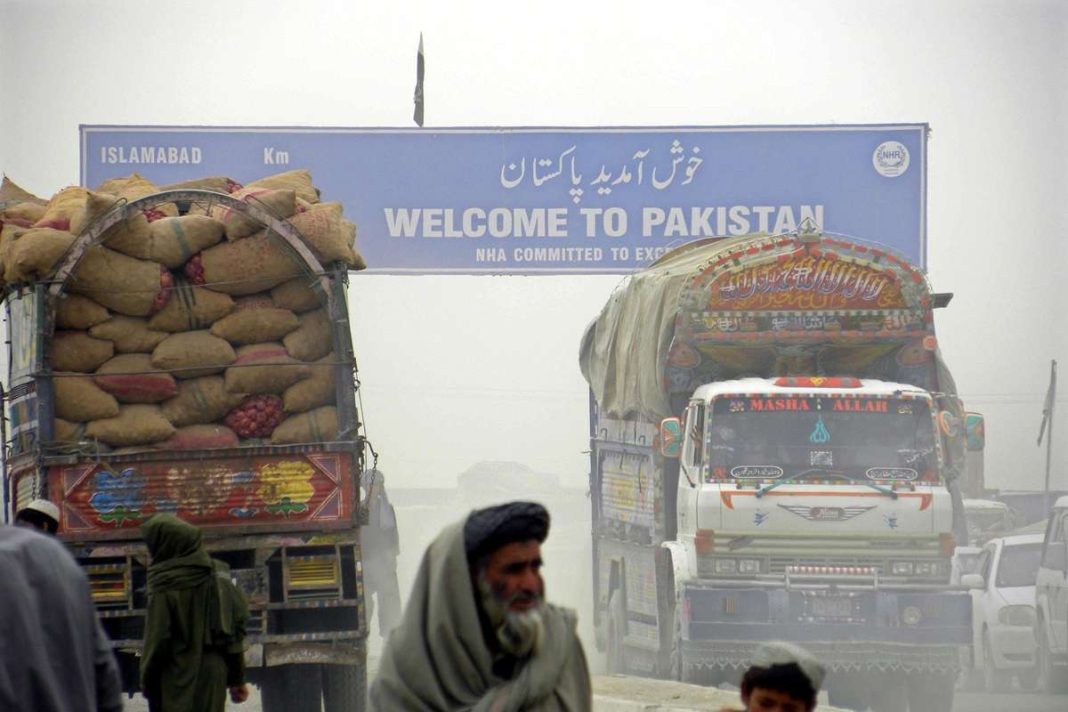
Policy should proceed without illusions. Pakistan should plan for three months of rising friction followed by potentially steep, formal declines in volumes at Torkham and Chaman. It should harden border management to contain smuggling spikes, keep perishable goods lanes operational for domestic price stability, and preserve macroeconomic discipline so that short-term supply shocks do not become inflationary spirals. It should also maintain a rules-based posture—enforce trade and transit law, keep channels open for humanitarian goods, and avoid rhetorical escalation that hands Kabul propaganda victories.
The Afghan leadership may see trade as a form of leverage. The arithmetic shows it is also a tax on their own people. Pakistan must be ready for that choice, keep its own house in order, and let the numbers do the talking.