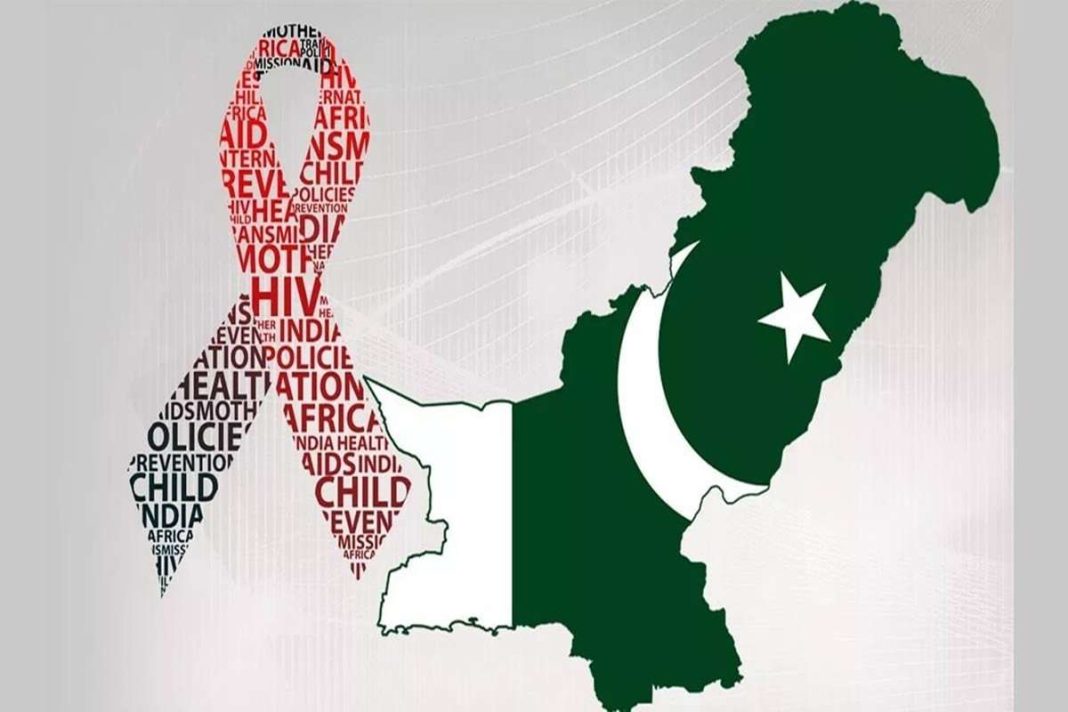
World AIDS Day 2025 brought Pakistan a harsh message. WHO and UNAIDS warned that the country now has one of the fastest-growing HIV epidemics in Asia, with new infections rising roughly 200 percent over the last 15 years. Officials estimate that Pakistan recorded more newly detected HIV cases in 2024 than ever before, and that 2025 will set another record.
Over the same period, however, the health system has expanded. Antiretroviral therapy (ART) centers have increased from 13 in 2010 to approximately 95 in 2025, and the number of people on treatment has increased eightfold. Treatment remains free, financed jointly by the Government of Pakistan and the Global Fund. The state is therefore far more active than it was a decade ago, but the virus is still outrunning the response. The strategic question is whether Pakistan can move from chasing rising numbers to controlling the epidemic while treating people living with HIV with dignity rather than suspicion.
Current estimates from UNAIDS and UNDP suggest that over 350,000 people are living with HIV in Pakistan. The government had registered about 74,619 HIV cases by late 2023, and this figure had risen to 78,734 by June 2025, compared to about 74,600 at the end of 2024 and 36,900 in 2019. The figure was roughly 16,000 in 2010. This widening gap between estimated infections and registered patients shows how many people never test or slip out of care.
Behind these numbers lies the “treatment cascade.”
According to WHO and UNAIDS, only about 21 percent of people living with HIV in Pakistan know their status, only 16 percent are on treatment, and only 7 percent have a suppressed viral load. Globally, about 87 percent of people living with HIV know their status. For Pakistan, this means most people with HIV remain undiagnosed; many of those who do test positive never start or stay on treatment; and very low levels of viral suppression allow ongoing transmission even as ART sites expand.
Geography adds another layer. Earlier, the government data, cited in reporting in late 2025, showed that as of late 2022, Punjab had more than 30,000 registered HIV cases, Sindh about 15,639, Khyber Pakhtunkhwa (KP) 5,138, and Balochistan 1,659. A 2025 clinical review found that Punjab reported the highest number of new cases among provinces, with 5,691 in the first nine months of 2024, reflecting both its population and multiple outbreaks linked to unsafe medical practices. Sindh reported about 2,531 new infections over the same period, with Karachi alone accounting for more than 600. KP registered 1,147 new cases, bringing its cumulative total to roughly 8,356 by late 2024.
Balochistan, while smaller, is trending sharply upward. On the eve of World AIDS Day 2025, officials in Quetta reported that registered HIV and AIDS patients had risen from 2,823 in 2024 to 3,303 in 2025, including 707 women and 90 transgender persons, with 452 deaths in a single year. They warned that the actual number probably exceeds 7,000 to 9,000 because many infected people have never been tested. By registered cases, Punjab remains first, followed by Sindh, KP, and Balochistan. Islamabad, Gilgit-Baltistan, and Azad Jammu and Kashmir contribute smaller totals but host meaningful urban and institutional clusters. The epidemic is therefore a patchwork of hot spots rather than a single national wave.
Prisons are among the most concerning of these hotspots. A December 2025 investigation described a rising number of HIV-positive inmates driven by injecting drug use, unprotected sex, and almost non-existent harm-reduction services. In Punjab’s Adiala Jail alone, authorities identified 148 HIV-positive prisoners, the highest figure ever reported for one prison in the province. Overcrowding and weak health services mean that jails can readily reseed infection into communities as prisoners cycle in and out.
Transmission patterns show why Pakistan’s epidemic remains stubborn. One driver is involved in unsafe medical care. Reporting from Karachi and earlier outbreak inquiries highlight unlicensed practitioners, reused syringes, and poorly regulated blood banks as major engines of infection. In Sindh alone, officials informed the provincial health minister in October 2025 that more than 600,000 “quack doctors” operate in the province, about 40 percent of them in Karachi. Routine illnesses treated with reused needles become entry points for HIV.
Another driver runs through people who inject drugs and other key populations. National and international studies agree that injecting drug users account for about half of registered HIV patients in Pakistan, with female, male, and transgender sex workers and men who have sex with men also heavily affected. Sharing needles, police harassment, and deep social exclusion keep many of these people far from services that could protect them and their partners.
Children and mothers form a third critical front.
WHO and UNICEF partners estimate that around 2,700 infants in Pakistan were newly infected in 2024, roughly seven babies each day, mainly because their mothers did not know their status or could not access timely prevention and treatment. Sindh alone reported almost 4,000 registered HIV-positive children by late 2025, a figure officials described as extremely alarming. Districts like Larkana and Ratodero, which suffered notorious pediatric outbreaks linked to unsafe injections, still live with that legacy. A child infected in such a setting may grow up in a family that fears disclosure; a prisoner may return with HIV to an already vulnerable neighborhood. The virus exploits weak systems and deep stigma simultaneously.
Despite these realities, the last decade has not been a story of state inaction. Pakistan’s Common Management Unit (CMU), which oversees TB, HIV, and malaria, notes that ART centers expanded from 13 in 2010 to 95 in 2025. The government, with Global Fund backing, provides ART medicines and laboratory tests free of charge. A recent UNDP brief reports that 51,821 people were on ART as of December 2024, up from roughly 6,500 in 2013, under a program of about 25 million dollars that focuses on people who inject drugs, sex workers, and transgender communities and works through civil society partners.
Surveillance has improved as well. The CMU’s World AIDS Day 2025 statement highlights better data systems, greater integration of HIV into primary health care, and digital tools for case management. Provinces such as Balochistan openly attribute higher counts to expanded testing, not to new failures. International and diaspora partners add capacity: WHO and UNAIDS continue technical support despite global funding pressures; SAARC’s workshop on TB and HIV accountability hosted in Islamabad in December 2025 kept the issue high on the agenda; and initiatives like the APPNA MERIT program “adopt” ART centers to strengthen clinical care and counseling.
Even with these gains, structural gaps remain large. Regulation of medical practice is weak; unlicensed clinics, informal injection practices, and poorly monitored blood banks remain widespread, and each periodic crackdown shifts quack practice to a new location. Harm-reduction services for people who inject drugs and for prisoners exist, but on a limited scale. As long as the law and popular attitudes treat drug users primarily as criminals rather than patients, needle-exchange programs and opioid substitution therapy will remain inadequate.
Stigma cuts across the map. Patients hide their status from spouses; parents refuse to share a child’s diagnosis with schools; health workers hesitate to treat people living with HIV. Transgender people and sex workers face not only social hostility but also police harassment and violence, which makes regular clinic visits risky. At the same time, surveys show significant gaps in basic HIV knowledge. Public campaigns still lean toward moralistic warnings rather than explicit, science-based messages about diagnosis, treatment, and prevention.
Modern science offers a very different picture. UNAIDS, the US Centers for Disease Control, and a vast body of research now agree on a simple principle: “Undetectable equals Untransmittable,” or U=U. A person living with HIV who takes ART and maintains an undetectable viral load does not transmit the virus sexually. HIV may not be curable yet, but with treatment, it becomes a controllable chronic condition. People on effective therapy can expect near-normal life expectancy, can marry, have children without transmitting the virus, and remain productive members of society.
On paper, Pakistan’s policies reflect this science. Treatment is free in public ART centers, and insurance schemes such as Sehat Sahulat have begun to include HIV for inpatient coverage and travel assistance. The missing element is communication. Religious scholars, media voices, and state campaigns rarely emphasize that people on ART who are virally suppressed are safe to live and work with. Instead, HIV is often presented as a moral punishment and a near-automatic death sentence. That narrative fuels discrimination in workplaces, schools, families, and even clinics, and it discourages voluntary testing, early treatment, and lifelong adherence.
Given the 2025 data, Pakistan’s choice is stark but realistic. It can continue with a slow, under-funded response that trails the virus, or it can align practice with the ambitions of the Pakistan AIDS Strategy IV. That means treating unsafe medical practice as a central pillar of prevention; expanding harm-reduction services and confidential testing for people who inject drugs and for prisoners; investing in community-led organizations that reach transgender people, sex workers, and other marginalized groups; and bringing U=U into public communication in Urdu and regional languages. It also means protecting HIV funding and political attention at a time when global aid is under strain.
The epidemic has used the last fifteen years well. Pakistan can still bend the curve in the next five, but only if it matches the virus’s speed with evidence-based policy, enforcement, and empathy.