Frontline Under Fire
Few law enforcement bodies have borne the brunt of Pakistan’s militancy like the police of Khyber Pakhtunkhwa. Over the last two decades, thousands of KP officers have died or been wounded facing insurgents: an estimated 2,100 police personnel have been killed and 7,000 wounded since 2001.
The toll has been a badge of sacrifice – and even official recognition.
In March 2024, KP’s Inspector-General of Police, Akhtar Hayat Khan, was decorated with the Sitara-e-Shuja’at by President Zardari “in recognition of his excellent performance in combating militancy” in the Malakand division. Through it all, KP police have been hailed as the state’s line of defense in the northwest.
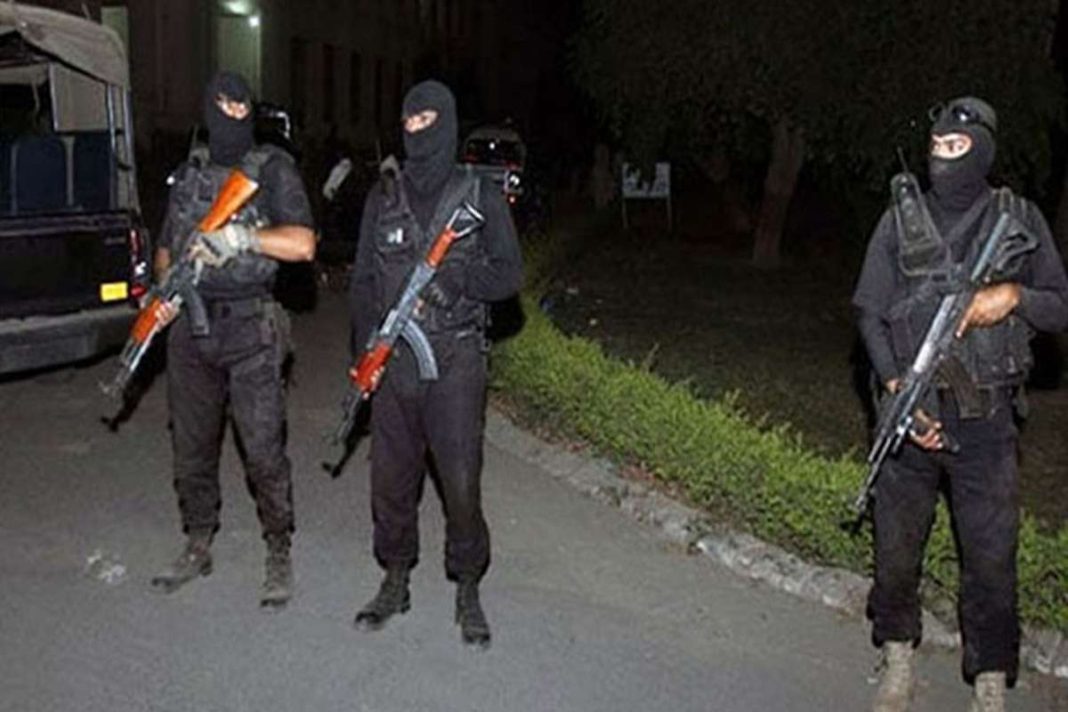
That first-line battlefield now includes the province’s specialized Counter Terrorism Department (CTD) – a wing of the provincial police created to target militants. The CTD was rolled out in the early 2010s in the wake of rising violence after the Lal Masjid showdown and the rise of the TTP. Its mission was clear: to form intelligence-led commando teams to hunt down terrorists that regular patrols could not reach. In theory, they should be a force multiplier for the war on terror.
Force Structure
Khyber Pakhtunkhwa’s police force today is sizable – about 80,000–85,000 strong according to official estimates – spread across roughly 300 police stations provincewide. These officers serve a population of over 30 million in rugged, militant-prone terrain. The CTD is a small fraction of this force: a recent report put its authorized strength at 3,161 personnel, of whom only about 2,135 were on duty. Even so, few of those CTD officers had the equipment or support they needed.
By comparison, Punjab’s CTD is much bigger and better funded.
At the national level, the gap is stark: Punjab CTD has multiple deputy inspectors-general (DIGs) and a well-resourced intelligence setup, whereas KP’s CTD worked for long years under only one PSP officer at the SSP level overseeing the entire wing. The KP’s so-called provincial “Reward Fund” for anti-terrorism was only about Rs. 70 million, versus roughly Rs. 475 million in Punjab. A Treasury official to whom KP tried to appeal for more resources recently told reporters that the disparity was “eye-opening”.
Operations
In practice, KP’s CTD and police have been at the forefront of nearly every major counterinsurgency operation in the province. They have planned and executed dozens of “intelligence-based operations” (IBOs) in districts from Swat and Malakand to DI Khan, Bannu, and Orakzai. For example, in early 2025, a joint police operation in Bannu killed two suspected militants – including a TTP commander linked to earlier attacks on CTD teams. Across KP last year, thousands of checkpoints were manned and hundreds of raids conducted, netting thousands of weapons and arresting thousands of suspects. In the DI Khan region, police and CTD forces reported killing 110 militants in 2024 (with 57 more arrested) during raids that unfortunately cost 39 officers their lives.
That grim toll reflects the high cost of such street-level battles for the security forces.
On other fronts, KP CTD units have tracked down mafia-era bomb makers and facilitators. In Peshawar and Nowshera, they joined counterterror raids that recovered arms caches of the Balochistan Liberation Army and other groups. They also helped foil numerous kidnapping and extortion rings linked to militants. But each small victory has come at a price – and has highlighted the severe resource gaps they face.
Lives Lost
The human cost in the CTD has been brutal. Over the past decade and a half, dozens of CTD officers have been murdered in attacks and ambushes. Some incidents stand out for their sheer carnage. In January 2023, a suicide bomber struck the mosque at Peshawar’s Police Lines, killing more than 80 people, many of them police officers on duty. CTD personnel were among the mourning ranks.
A similar shooting in May 2023 ambushed a CTD convoy in Kohat, killing three police officers. In March 2025, two CTD officers – Inspector Zahid-ur-Rehman and ASI Ghulam Mustafa – were gunned down near Kohat’s Tanda Dam in a daylight drive-by attack.
Some of the deadliest blows came when militants breached CTD outposts themselves. On 18 December 2022 in Bannu, a detained terrorist at the local CTD cell overpowered a guard and freed dozens of comrades. In the ensuing gun battle with security forces, one CTD constable was killed and another critically injured. In that same winter of 2022–23, militants targeted CTD teams in Lakki Marwat and Tank districts, ambushing patrols and planting roadside bombs that killed and wounded officers. Overall, police statistics for 2024 show roughly 149 officers in KP killed in the line of duty (and 232 wounded) – a number in which CTD men are heavily represented.
Amid these losses, the CTD rank-and-file have gained a reputation as heroes who kept grinding. Rather than complain publicly about backbreaking shifts or missing kits, officers often just bore it.
Federal War Funds, Local Shortfalls
In Islamabad’s official narrative, none of this should have happened. Since 2010, the federal government has claimed to provide a massive “war on terror” subsidy to KP. As of 2025, documents reveal that the province has been allocated roughly Rs. 700 billion (a little over $2 billion) over 15 years from its federal divisible pool, earmarked explicitly for counterinsurgency. These funds were supposed to build up KP’s security agencies, compensate victims, and rebuild infrastructure after military operations.
In practice, however, the money produced little evident benefit for ground troops.
Provincial officials now note that this levy was mainly intended as compensation for losses, not discretionary spending on policing. More damningly, a recent investigation found that little audit or oversight was done on these sums. The News in December 2025 reported that despite Rs. 700 billion in disbursements, “neither has terrorism been eliminated, nor have police capabilities improved” – and that “no comprehensive audit” had been carried out to account for the spending.
Some of the gaps have been blamed on endemic corruption.
As far back as 2013, Pakistan’s National Accountability Bureau (NAB) unearthed a multi-billion-rupee scandal in the KP police procurement process. It found that in 2008–2010, the provincial government had approved Rs. 7 billion for weapons, vehicles, and protective gear, but many contracts were rigged. The NAB probe concluded that officials had awarded tenders to favored firms with no experience, grossly violating procurement rules. Much of the gear delivered was later found to be “substandard” or overpriced. In one infamous example, a contractor-turned-approver told the court that senior KP police and political aides took kickbacks on bulletproof jackets and rifles – inflating prices and skimming the rest.
A high-profile case even implicated provincial leaders.
When details emerged in 2014, KP Chief Minister Ameer Haider Hoti (2008–2013) publicly announced that he had formed his own inquiry. NAB later filed a Rs. 2.03 billion corruption reference naming former IGP Malik Naveed, Hoti’s brothers, and other officials in the arms scam. In total, hundreds of millions in kickbacks were revealed – though prosecutions ultimately fizzled out. Observers say the graft went beyond the police: some assemblies and ministries faced separate allegations of fraud in CTD kit purchases.
Yet CTD officers kept fighting with whatever they had. Throughout the 2010s, soldiers found hungry subordinates, worn-out boots, and bullet holes in repair-ready vests. Even when Islamabad promised new equipment, delivery was spotty. A December 2022 Dawn report noted that KP’s CTD received essentially no budget for procuring weapons or gear – only salaries and operating expenses, which absorbed 96% of its small budget. Many officers quietly discarded expired bulletproof vests. They used their aging equipment, but none of them defected to the Taliban; all stayed and continued planning and carrying out the raids.
Promises vs. Reality (2013–2025)
When Pakistan Tehreek-e-Insaf (PTI) took over KP in 2013, it championed security-sector reform and boosted donor-funded development. It launched projects to build modern police stations and training centers. PTI leaders regularly highlighted improvements in crime stats and pledged better support for frontline forces. In the federal parliament and the court, they said terror was in retreat.
On the ground, however, CTD officers saw little real change.
The national security review of early 2023 bluntly criticized the PTI government for its “zero” performance in building counterterrorism capacity. Its authors noted that KP’s share of CTD resources was tiny: Punjab’s unit boasted two DIGs and many SSP-rank officers, as well as fully funded forensic labs and cyber units. At the same time, KP’s CTD had a single PSP officer at the top at that time. It had no headquarters building and almost no special facilities. Even basic items like vehicles and communications gear were scarce – a 2023 report found KP’s CTD had just 448 vehicles (mostly motorcycles), compared with 1,466 in Punjab. Training was ad hoc: KP had no CTD training academy; instead, it sent recruits by charter bus to Punjab for short courses.
The human toll was stark: despite its smaller area and population, KP saw dozens more terror incidents than Punjab each year. For example, in 2022, Punjab had five incidents vs 704 in KP. KP CTD men were being killed at far higher rates – yet remained poorly paid.
The same January 2023 report found that CTD-KP salaries were only ~30% higher than those of regular police, whereas in Punjab, CTD officers received many additional perks. As Interior Minister Rana Sanaullah pointed out, the CTD in KP “reward fund” was only Rs. 25 million compared to Punjab’s Rs. 276 million, and there was a 70% pay gap. In short, CTD personnel were fighting on ground that was financially tilted against them.
By late 2022, PTI critics in KP openly blamed their government. Opposition politicians said their own chief minister had failed to meet CTD needs while grandstanding on other issues. Federal leaders echoed this, warning that CTD in KP had effectively been “ruined” by years of neglect. KP’s then-CM admitted the province remained heavily reliant on Islamabad for security funding, but also insisted the “war-on-terror” money was compensation, not extra spending.
Need for Oversight
The mismatch between massive federal transfers and persistent weakness has alarmed analysts. Many now call for a tougher federal audit of how KP uses anti-terror funds. If Rs. 700 billion was meant to fix KP’s security apparatus, they ask, why does its CTD still lack high-quality bulletproof vests and modern intel tools? A report in The News concluded bluntly that no formal mechanism ensures these funds reach counterterror operations. Even KP’s own finance adviser admitted the one percent (federal) allocation was better seen as reparations to a conflict zone. Critics argue this only underscores the need for accountability: Islamabad should set clear guidelines and audit trails for any counter-terror grants to provinces.
At the very least, they say, KP’s failure is a warning: provincial agencies cannot simply be entrusted with federal money. Given the historical procurement scandals, a joint federal-provincial committee might be warranted to track equipment purchases. Political observers likewise note that security-sector aid demands civilian oversight. In Pakistan’s situation, large security budgets cannot be treated as slush funds. If KP truly is on the frontline, it deserves both the money and the scrutiny that such critical spending requires.
A Call to the New CM
Khyber Pakhtunkhwa’s counterterror fighters have proved themselves willing to bear any burden. They have pursued militants into every dark valley of the province – even as their own uniforms frayed and their radios failed. Their story is one of dedication amidst deprivation. Pakistan now faces a choice: either keep rewarding this sacrifice with empty promises, or change the game.
For the newly elected KP government under the Chief Minister, the message is clear: secure your own house. The Assembly that elected Mr. Afridi entrusted him with the province’s security, not the hardliners, YouTubers, or those moaning from behind the walls on Adiala Road in Rawalpindi. If KP’s frontier force is to continue holding back terrorism, its leaders must finally be given the tools, training, and accountability they need.
Men of valor should not have to fight poverty as well as enemies. The province’s own government must ensure its CTD is no longer underfed, under-gunned, or under-supervised.