$40 Million a Week: Why Pakistan Should Care
A simple claim has circulated since the Taliban returned to Kabul in August 2021: the United States “gives” the Taliban $40 million every week. The figure shows up in Pakistani conversations as shorthand for Western hypocrisy and as a suspected explanation for the post-2021 rise in militant violence in Pakistan.
A careful look shows a more complicated reality. The “$40 million” framing conflates three distinct streams: US-funded humanitarian assistance, UN operational finance, and Afghanistan’s liquidity crisis under Taliban rule. That complexity does not make the security concern disappear. It makes the risk harder to measure, easier to deny, and more dangerous to ignore.
Pakistan sits on the receiving end of that ambiguity.
The Taliban’s consolidation of power has coincided with a sustained surge in terrorist attacks in Pakistan, especially in Khyber Pakhtunkhwa and Balochistan. Pakistan’s security services blame cross-border sanctuaries and facilitation. Pakistan’s diplomats ask Kabul for action and mostly receive evasion. In that setting, a large, recurring inflow of hard currency into Taliban-run Afghanistan becomes a regional security variable, whether Washington likes it or not.
Anatomy of Weekly $40 million
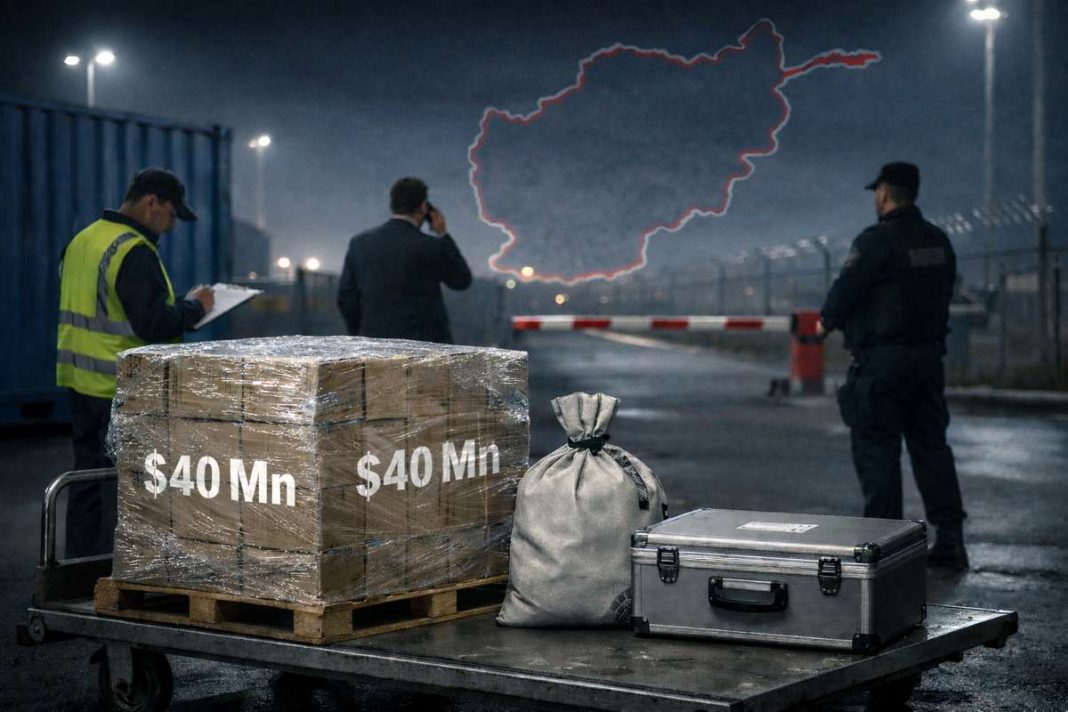
First, the best-documented “$40 million a week” is not a US Treasury check written to the Taliban. It is cash physically transported into Afghanistan by the United Nations to pay for humanitarian operations in a country where the formal banking system struggles to move money at scale.
A US government watchdog report described the mechanism plainly: the United Nations transported $3.8 billion in cash into Afghanistan between December 2021 and January 2024. That same oversight ecosystem also quantified the weekly pace in simple terms. SIGAR’s “Lessons Learned” report noted that the UN flew in $3.6 billion in 2022 and 2023, which “averaged about $40 million per week.”
Second, the United States plays a significant role as a donor to Afghanistan’s humanitarian response, but the US government states that it does not assist the Taliban. The policy aim has been to fund aid delivery while avoiding direct budgetary support to Taliban-governed institutions. This approach relies heavily on UN agencies and international NGOs as intermediaries. That design, however, collides with Afghanistan’s on-the-ground reality: the Taliban controls territory, rules permitting, taxes commerce, licenses businesses, influences hiring, and can extract revenue from almost any large-scale activity.
Third, the “weekly” nature is not a permanent treaty obligation. It is an operational rhythm that emerged from conditions on the ground, especially the need to pay staff, contractors, and local suppliers in cash when bank transfers cannot do the job. SIGAR’s timeline matters here: the cash pipeline began in December 2021, not on day one of the Taliban takeover.
US Policy After 2021
Another part of the story sits in Washington’s policy choices after August 2021. The Taliban takeover triggered a rapid collapse in donor-backed state finance and a freezing of Afghan reserves held abroad. Afghanistan’s banking system faced severe constraints, and sanctions compliance risk made banks even more cautious.
In response, Washington pursued a two-track approach: keep pressure on the Taliban through sanctions and political isolation, while allowing humanitarian activity to continue through “carve-outs” and licenses. The Treasury’s Office of Foreign Assets Control issued Afghanistan-related general licenses designed to permit certain transactions involving governing institutions for humanitarian purposes. Treasury also issued guidance framed around enabling humanitarian assistance and support for the Afghan people, emphasizing lawful channels rather than direct support to the Taliban.
A key point often missed in Pakistani debates is that the policy problem Washington tried to solve was not generosity. It was risk management: preventing famine, preventing mass displacement, and preventing Afghanistan from becoming an ungoverned space for transnational terror again, while refusing to recognize or fund the Taliban as a normal government. That balancing act might sound coherent on paper. It becomes brittle in practice because money is fungible, and power in Afghanistan sits with the Taliban.
Oversight Exists, Control Does Not
Pakistan’s core question should not be whether the US intended to fund the Taliban. The more complicated and more relevant question asks whether the oversight system can credibly guarantee that large cash inflows do not strengthen Taliban capacity and, indirectly, militant ecosystems that harm Pakistan.
The US oversight record does not inspire confidence. SIGAR documented repeated difficulties in tracking end-use and in verifying downstream impacts in Taliban-controlled areas. The limitations become more severe when assistance moves through layers of contractors, sub-grantees, and local markets.
Congress has pressed this issue, at least episodically. SIGAR’s lessons-learned report describes how the House Foreign Affairs Committee asked SIGAR to examine the “impact of the introduction of large amounts of US dollars into Afghanistan’s economy.” That request signals a basic concern: even if aid does not flow directly to the Taliban, cash inflows can still stabilize Taliban rule, lubricate patronage networks, and create revenue opportunities through taxation and capture.
One can call that oversight. One cannot call it control.
Where Does the Cash Go?
Money entering Afghanistan through UN cash shipments performs several functions at once.
A practical function comes first. Humanitarian agencies need to pay salaries, rents, transport, fuel, and local procurement costs. In a cash-based environment with limited banking rails, hard currency becomes the operating system.
A macroeconomic function follows. Large, regular cash inflows can ease liquidity shortages and support currency stability. Analysts have noted that dollar auctions and market supply influence the Afghan currency’s exchange rate and domestic prices, even when the political system remains sanctioned. That effect might reduce humanitarian suffering in the short term, which donors often cite as the overriding goal.
A political economy function sits underneath. Even if a UN agency pays a vendor, the Taliban can still extract value through taxes, customs, road checkpoints, licensing fees, “protection” demands, or control of key sectors. SIGAR’s cash-shipment reporting centers on logistical realities, but the strategic implications are unavoidable. As cash circulates, some portion becomes Taliban-adjacent revenue, while another frees Taliban resources for other priorities.
This is the part US policymakers often prefer to describe as manageable risk. Pakistan should describe it as an unpriced security externality.
Why Pakistan’s Security Debate Keeps Returning to Afghanistan
Pakistan’s post-2021 security environment has featured a sharp increase in militant capability and tempo. PIPS, summarizing 2024, drew a direct line between rising attacks and the regional context, noting the surge “coincided with the Taliban’s rise to power in neighboring Afghanistan in 2021.”
PIPS also documented allegations about training and facilitation across the border. Its 2024 overview cited reporting on a TTP suicide bomber who described training in Afghanistan and facilitation into Pakistan, and it referenced claims of sanctuary and resources for senior TTP leaders inside Afghanistan.
These details matter because they describe the mechanism by which Afghanistan’s internal governance conditions translate into Pakistan’s casualty figures. If Afghanistan provides sanctuary, training, and logistics, then Afghanistan’s liquidity conditions also matter. A militant ecosystem does not require direct cash transfers from donors. It requires permissive space, supply routes, and usable money in the broader economy.
A Bloodied Trail: 2021-2025
2021 marked the inflection point. Following the Taliban’s return to power in Kabul, Pakistan recorded approximately 300 terrorist attacks nationwide. Within this total, Tehrik-e-Taliban Pakistan (TTP) claimed or was attributed 87 attacks, concentrated mainly in Khyber Pakhtunkhwa’s former tribal districts. Baloch Liberation Army (BLA) accounted for 38 attacks, primarily targeting security forces and infrastructure in Balochistan. Analysts at the time already linked the rebound in TTP activity to renewed cross-border sanctuaries in Afghanistan.
2022 saw consolidation rather than de-escalation. Pakistan experienced around 380 terrorist attacks, reflecting a steady upward trend. TTP-linked violence remained persistent, with 89 attacks claimed or attributed to the group, including targeted killings and assaults on police and Frontier Corps installations. Baloch terrorist violence also expanded, with 46 BLA attacks, highlighted by high-impact incidents such as the suicide bombing at Karachi University. The year underscored how militant groups were moving from recovery to operational confidence.
2023 filled in the missing middle of the escalation curve. Pakistan recorded approximately 645 terrorist attacks nationwide, a sharp increase over 2022. More than 60 percent of these attacks were attributed to TTP and its affiliated factions, which resumed suicide bombings and coordinated assaults. BLA and allied Baloch terrorist groups were responsible for an estimated 150 to 170 attacks, depending on attribution methods, expanding operations toward Gwadar, Kech, and coastal infrastructure. By this point, the violence had become structurally embedded rather than episodic.
2024 represented a paradoxical dip in aggregate numbers but a rise in lethality. Pakistan saw 521 terrorist attacks, a numerical decline compared to 2023, but still among the highest levels in a decade. TTP-linked groups continued to dominate violence in Khyber Pakhtunkhwa, while Baloch terrorists, led by the BLA, intensified attacks in Balochistan with greater tactical sophistication. Think-tank assessments emphasized that militant capability, not just frequency, had expanded significantly since 2021.
2025 closed the period with a stark warning. Pakistan recorded 1,066 militant attacks, the highest annual total since 2014. TTP and allied Islamist groups drove much of this surge, including a near doubling of suicide attacks, while Baloch terrorist violence sustained pressure on security forces and economic targets. By the end of 2025, Pakistan faced a security environment measurably worse than at any point since the early phase of Operation Zarb-e-Azb.
If the question demands “BLA-only” annual attack counts for 2024-2025, one must distinguish between verified incident datasets and terrorist self-reporting. SATP, a well-known open-source conflict tracker, relayed that the BLA’s own annual report claimed 302 attacks in 2024, a figure that should be treated as a militant propaganda claim rather than an independently verified count.
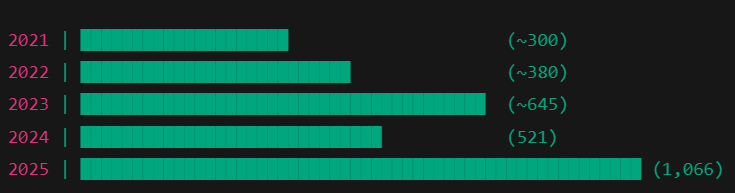
The honest takeaway is that the situation looks uncomfortable, and a significant rise in overall militancy after 2021 is evident. The TTP-linked violence dominates the northwest, while Baloch terrorist violence surged in Balochistan and expanded in tactical ambition.
The Terror Financing
Another misconception distorts debate in Islamabad: the idea that terrorism financing requires a neat transfer, one pot of money funding one attack plan. In reality, militant financing often looks like a patchwork of criminal revenue, coerced taxation, donations, and facilitation by sympathetic networks.
TTP financing has historically included extortion in areas of influence, kidnapping for ransom, “taxation” of transport and trade routes, and payments tied to local protection rackets. The group also benefits when it can recruit, train, and plan in sanctuary areas, thereby reducing operational costs and increasing survivability. PIPS’s reporting on cross-border facilitation claims underscores this sanctuary dimension.
BLA financing varies by faction, but open-source assessments emphasize diaspora funding streams, coercive fundraising in parts of Balochistan, and revenues linked to control or disruption of local economic activity. The fragmentation of Baloch terrorist factions further complicates attribution and financing pathways, as specialist analysis has noted.
This is where the US “$40 million a week” issue becomes strategically relevant. Even if UN cash pays for food distribution or staff salaries, that money still expands liquidity in an economy controlled by an armed movement. The Taliban can extract value without appearing as the “recipient.” That is how fungibility works, and it is why oversight framed only as “we did not hand cash to the Taliban” answers the wrong question.
Islamabad Must Seek Washington’s Role
Pakistan should raise this issue with the United States in a structured, evidence-based manner across multiple forums.
A credible approach begins by separating humanitarian intent from security outcomes. Islamabad can acknowledge the humanitarian rationale while demanding transparency regarding the security implications of the cash pipeline.
A practical diplomatic ask should focus on measurable items: publication of aggregate cash-shipment data; disclosure of oversight findings on diversion risk; mapping of Taliban taxation and fee capture linked to humanitarian operations; and coordination with multilateral watchdogs to standardize auditing where feasible. SIGAR’s own work provides a starting point for the questions Washington should already be answering more publicly.
A second ask should address conditionality. If Washington insists the pipeline must continue to prevent humanitarian collapse, then Washington should also support explicit pressure on Kabul regarding cross-border militancy. PIPS and PICSS both describe the scale and lethality of the militancy surge, providing Pakistan with empirical grounds to argue that the regional security cost is no longer hypothetical.
A third ask should involve joint counter-financing work. Pakistan can propose intelligence-sharing mechanisms focused on hawala networks, cross-border smuggling corridors, and procurement abuse that could allow diverted funds to reach militant ecosystems indirectly. This agenda will not produce neat public victories, but it can create operational friction for militants, which is what matters.
Afghanistan is Not a “Brotherly Country”
Pakistan should stop treating Afghanistan as a relationship managed by sentiment, slogans, or the hope that shared religion produces shared interests. State behavior since 1947 has repeatedly shown that Kabul’s ruling coalitions, including today’s Taliban, pursue their own strategic objectives, even when those objectives cut against Pakistan’s security.
A sober framework should treat Afghanistan as a separate sovereign actor that often behaves as an adversarial neighbor, especially on border legitimacy, sanctuary politics, and proxy tolerance. Pakistan should pursue diplomacy, trade, and deconfliction where possible. Pakistan should also build a policy on deterrence, conditional engagement, and hard verification, not on fraternity narratives.
The “$40 million a week” question matters because it captures a larger point: money, legitimacy, and capability flow into Taliban-run Afghanistan through channels that outsiders only partly control. Pakistan pays a share of the downstream bill in blood and instability. Islamabad should demand that Washington, the UN system, and Kabul each answer a more straightforward question than they currently face: not whether aid is “humanitarian,” but whether the current architecture unintentionally underwrites a regional security reversal that Pakistan is already living through.