

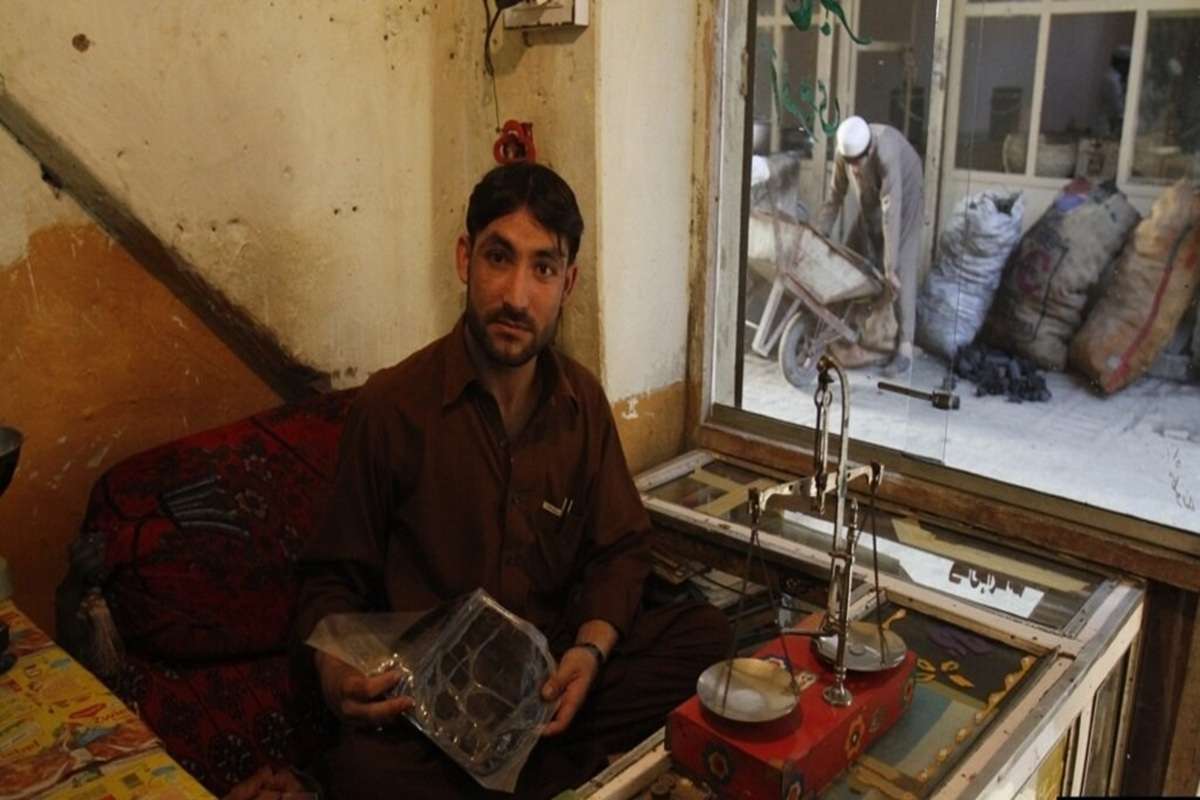
In Pakistan’s remote Tirah Valley, long known for cannabis and opium production, the narcotics economy and militant violence are deeply intertwined. The rugged region, straddling the Afghanistan–Pakistan frontier in Khyber District, is awash in contraband. Hashish (“charas”) and heroin from local poppy crops or trafficked in from Afghanistan, alongside newer drugs like methamphetamine (“ice”), move through its mountains.
These profits not only sustain smugglers; they also help finance terrorism.
As Pakistan faces a resurgence of extremist attacks, a tricky question follows: are the drug routes of Tirah bankrolling the militants who target the Pakistani state? Understanding this narco-terror nexus now sits at the center of Pakistan’s security, social, and regional challenges.
A Cross-Border Haven for Narcotics
Tirah Valley’s role in the drug trade is rooted in its geography and political history. Located in the former Federally Administered Tribal Areas (FATA), it remained beyond the full reach of Pakistani law for a long time. The Afridi tribes of Tirah, with kin across the border in eastern Afghanistan, have engaged in smuggling for generations, from gold and consumer goods to narcotics.
During the 1980s and 1990s, as Afghanistan became the world’s largest source of opium, Tirah emerged as a key transit and processing hub. A Khyber-based “drug lord”, Haji Ayub Afridi, is frequently cited as a pioneer of this trade. Afridi, a tribal power-broker and later a politician, leveraged the region’s autonomy and his cross-border clan ties to assemble a heroin and hashish empire. Accounts describe him as a primary architect of the modern heroin trade in and around Afghanistan, using his smuggling network to move Afghan opium into secret laboratories in the tribal belt for processing into heroin.
This enterprise thrived in a governance vacuum. Pakistani authorities had little sustained presence in Khyber Agency, and even notorious traffickers faced few consequences if they stayed on tribal soil. When the United States indicted Haji Ayub Afridi in the early 1990s for shipping some 50 tons of hashish to America, he evaded arrest for years by remaining in the “lawless” Tirah area. Officials later acknowledged that under the old arrangements, the central government had no legal right to operate there without the permission of local tribal leaders. In practice, this meant that drug barons such as Afridi could function as de facto authorities.
By the 1990s, the Afghanistan–Pakistan narcotics pipeline was booming, and clans from Tirah sat near its center. A 2003 investigation by US authorities exposed a heroin ring linked to the Afridi clan that spanned Pakistan, Afghanistan, Thailand, Canada, and the United States. Investigators described an “international drug-trafficking operation” moving Afghan heroin through Pakistan’s then North-West Frontier and onward to Western markets. The Afridis, entrenched around the Torkham border crossing, were identified as key players with decades-long involvement in opium and heroin smuggling.
Traditional tribal structures helped sustain this trade. Close-knit family networks and cross-border ethnic ties allowed opiate smugglers to operate with impunity and even monopolize key routes. The Shinwari on the Afghan side and the Afridis on the Pakistan side effectively ran the Khyber Pass corridor. Over time, large segments of Tirah’s local population became economically dependent on this illicit economy, which blended quietly into everyday life.
Smugglers, Kingpins, and Their Networks
The names behind the narcotics business in and around Tirah form a dense web of personal, tribal, and regional connections. Foremost is Haji Ayub Afridi, whose career illustrates the intersection of crime, tribe, and state. In the 1980s, as General Zia-ul-Haq’s Pakistan and the CIA, through Operation Cyclone, supported the Afghan Mujahideen against the Soviet Union, Afridi reportedly cooperated with Pakistani and US intelligence, moving weapons into Afghanistan and narcotics out along the same routes.
By the early 1990s, he had built a lavish hilltop mansion valued at around $2 million in Landi Kotal. In a largely impoverished area, the source of that wealth was no mystery.
Afridi was alleged to have amassed large stockpiles of narcotics: authorities at various points linked him to 17 tons of hashish seized from a single warehouse and multi-ton heroin consignments bound for Europe. Eventually, he was convicted in both the United States and Pakistan on drug trafficking charges.
Yet Afridi was also elected to Pakistan’s National Assembly in 1990, a detail that highlights how deeply the narco-economy penetrated formal politics. His dual role as a tribal elder and parliamentarian gave his network influence and, critics argue, protection. His organisation could bribe or intimidate its way past authorities, from the Afghan borderlands to international shipping routes.
Afridi’s fall did not dismantle the infrastructure he had helped build.
Associates and rivals, often drawn from the same extended clan, adapted and continued the trade. US indictments and DEA operations in the 1990s and 2000s named other Pakistani–Afghan traffickers, including Afridi relatives and allied tribespeople, operating heroin laboratories and laundering profits through front businesses as far away as Bangkok.
Prominent drug lords from the wider region, such as Afghan Baloch trafficker Haji Juma Khan and Taliban-linked smuggler Haji Bashir Noorzai, although not from Tirah itself, intersected with the same transport corridors and markets. Collectively, these figures illustrate how narcotics kingpins operate as regional power brokers rather than merely local criminals.
Studies of the Golden Crescent, i.e., Iran, Afghanistan, and Pakistan, drug economy have noted that the families tied to opium smuggling and money laundering in this area have remained remarkably stable over three decades of war and regime change.
In practical terms, many current smugglers in Tirah are the sons, nephews, or protégés of older kingpins. They inherit not only the routes and contacts, but also the local social capital. That continuity underpins the trade’s resilience.
Pakistani authorities report that narco-networks in Khyber remain active. Periodic crackdowns expose their persistence. In one recent operation, the Anti-Narcotics Force seized 144 kilograms of hashish hidden among rocky cliffs in Khyber District, part of the broader Tirah terrain. The haul was linked to a “notorious Bara-based gang” of Afridi smugglers, suggesting that well-known local outfits continue to move product from the valley to large Pakistani cities and beyond.
In Tirah’s bazaars, journalists and officials have documented dozens of shops openly selling hashish. One market in Jamrud was reported to host some 250 such outlets. Prices and supply were tightly controlled by a “banned outfit”, a colloquial reference to a proscribed militant group. That group set rules, enforced discipline, and collected its share. The line between cartel and insurgent, in these conditions, is thin.
Drug Money in the Hands of Terrorists
Over the past two decades of conflict around the Durand Line, narcotics have become an essential source of financing for armed groups. The most visible case is the Afghan Taliban.
During the US and NATO presence in Afghanistan from 2001 to 2021, the Taliban systematically derived funds from the opium trade. They levied informal taxes on poppy farmers and smugglers, charged protection fees for convoys, and moved into direct involvement in heroin and methamphetamine production.
By the late 2010s, analysts estimated that the Taliban were earning hundreds of millions of dollars annually from narcotics. The revenues paid for weapons, logistics, and fighters’ stipends. The war effort and the drug economy fused; an insurgent group that preached Islamic rectitude relied heavily on so-called haram money to sustain its operations.
The Taliban’s return to power in Kabul in 2021 has not removed this financial logic.
In 2022, the Taliban regime announced a formal ban on poppy cultivation. While there has been some decline in recorded opium cultivation in 2023, evidence suggests that narcotics and other illicit trades continue to provide significant revenue streams. Methamphetamine production, using wild ephedra plants in Afghanistan, has grown as a complementary or substitute trade.
In parallel, humanitarian dynamics have introduced another funding channel. To prevent economic collapse, the United States and international agencies have flown large amounts of cash into Afghanistan. The Afghan central bank has publicly stated that shipments of up to $40 million in money arrive in Kabul each week for humanitarian programs. Officially, these funds are meant to bypass the Taliban government and go directly to NGOs. Still, multiple oversight reports and hearings in Western legislatures have raised concerns that Taliban authorities skim this money by restricting NGO access, taxing expenditures, and controlling currency exchanges. One US lawmaker summarized the effect by saying that tens of millions of dollars of the US taxpayers’ money end up in Taliban hands each week.
Smuggled US dollars from Pakistan add to this lifeline. Pakistani and international reporting have estimated that up to $5 million in cash is illicitly carried across from Pakistan to Afghanistan each day, stabilizing the Afghan currency while contributing to Pakistan’s dollar shortage.
For Pakistan, this convergence presents a double threat.
The Taliban appear to have access to substantial off-budget funding from drugs, diverted aid, and cross-border smuggling. Islamabad alleges that, despite formal assurances, the Afghan Taliban have not severed ties with Tehreek-e-Taliban Pakistan (TTP). Instead, the TTP enjoys sanctuaries and freedom of movement on Afghan soil. With finances buttressed by these illicit flows, the TTP has carried out a renewed campaign of attacks inside Pakistan since 2021.
At the same time, narcotics produced in or transiting through Afghanistan and Tirah feed Pakistan’s own drug markets. High-purity heroin and methamphetamine reach urban centers, while hashish from Tirah is widely available among Pakistani youth. The resulting health and social damage adds another layer of cost to an already fragile security environment. Afghanistan’s illicit exports to Pakistan now include both drugs and violence.
Tirah’s Narco-Terror Nexus on the Ground
Tirah Valley offers a concentrated view of how smuggling and militancy intersect. Its forests, ravines, and high passes have long provided cover for insurgents, from Pakistani Taliban factions to local warlords. Wherever fighters have taken hold, the drug trade has either followed or provided a foundation.
During earlier phases of Pakistan’s military operations against the TTP and allied groups, Tirah repeatedly figured as a hub for both militancy and narcotics. Lashkar-e-Islam, the group led by Mangal Bagh, took control of large parts of the valley in the late 2000s. Reporting from that period described how the group controlled hashish markets and smuggling routes, using the proceeds to arm and sustain its fighters. Mangal Bagh, himself an Afridi, effectively ran a parallel administration funded by smuggling until he died in 2021.
As the TTP and allied factions regained space in the borderlands following the Taliban takeover in Kabul, they turned again to the drug economy. A 2022 research report documented how TTP militants were extorting traffickers moving heroin and crystal meth from Tirah toward Peshawar. Trucks carrying narcotics, and sometimes weapons, from the valley to Jamrud paid so-called taxes to armed groups along the route. The militants behaved like a mafia: they allowed smuggling in exchange for a fixed share of profits, which then financed further militant operations.
Local accounts describe how commanders from banned outfits oversee narcotics markets in Khyber. In one Tirah locality, the price of a kilogram of hashish and the timing of supply were set by a militant commander acting as both drug boss and ideological leader. These arrangements reinforce the symbiosis between traffickers and terrorists.
The logic is direct. Revenues from cannabis, opium, and synthetic drugs originating in or moving through Tirah help purchase weapons, explosives, and logistical support for attacks on Pakistani targets. Efforts by security forces to interdict shipments or close routes often encounter armed resistance. Smuggling funds militancy; militancy, in turn, ensures that smuggling corridors remain open.
Smuggling and Governance Failure: The Bigger Picture
Tirah’s narco-terror web fits into a wider pattern of smuggling and weak governance along the Afghanistan–Pakistan border. For decades, illicit trade has extended beyond narcotics to a broad range of goods and has deeply damaged Pakistan’s economy and institutions.
Under the Afghan Transit Trade (ATT) agreement, Pakistan allows duty-free import of goods destined for landlocked Afghanistan. In practice, a significant share of these goods never leaves Pakistan. They are diverted into local markets without duties, undercutting compliant businesses and draining public revenues. Items ranging from Iranian fuel to consumer electronics and textiles move through this channel.
Recent estimates by the Pakistan Business Council (2023) suggest that Pakistan loses around Rs 19 trillion (approximately $68 billion) annually to illicit trade. The figure underlines how deeply the illegal economy, of which smuggling is an integral part, has taken root. It has created vested interests at multiple levels: transporters, cross-border carriers, corrupt officials, and major kingpins who can influence politics and administration.
These same networks overlap with those used to move drugs, weapons, and migrants. For militant groups like the TTP, controlling segments of this illicit economy is a strategic objective as much as a financial one. Analysts note that the rise in violence in districts such as Khyber, Kurram, and North Waziristan often coincides with contests over smuggling routes and revenue sources.
Pakistan’s efforts to fence the Afghan border and tighten controls at formal crossings like Torkham have constrained some flows but not eliminated them. Traffickers and insurgents have shifted to gaps in the fence, particularly in more remote southern stretches of the frontier. Control of those gaps allows higher fees and bribes, further enriching the networks that dominate them.
Seen this way, the unrest in the tribal areas has a precise economic dimension. Attacks on security forces or on pro-government tribal elders frequently serve to deter interference with lucrative illegal business. The Pakistani state and public bear the costs of this arrangement: in lost tax revenue, weakened lawful enterprise, rising addiction, and repeated terror incidents.
Breaking the Cycle – Pakistan Takes Another Chance
Tirah’s story is, at its core, a record of state absence and delayed response. For decades, successive governments failed to establish effective authority or development pathways in the tribal belt. In that vacuum, a parallel order took shape, where tribal smugglers and religious militants operated as the decisive power structures.
Reversing that order will be difficult, but the alternative is a continued cycle of violence and criminality. The Afghan Taliban have shown limited willingness to dismantle the narcotics economy on their side of the border or to expel Pakistani militants. Inside Pakistan, any ambiguity or partial measures only strengthen the narco-extremist nexus that now runs from Tirah to major cities.
Pakistan’s response must therefore operate on several fronts.
On the security side, intelligence-led operations need to target major trafficking networks, their financiers, and their protectors. Seizures such as the 144 kilograms of hashish recovered in Khyber are essential, but dismantling the underlying chains of production, transport, and money laundering matters more. This will require confronting individuals who enjoy political or bureaucratic protection, and demonstrating that no one is beyond the reach of law.
Strengthening border management, completing and monitoring the fence, and tightening oversight of transit trade through tools such as electronic tracking and stricter penalties for misdeclaration are essential steps.
At the same time, enforcement alone will not address the structural drivers. The people of Tirah and similar areas require viable alternatives to illicit economies. Since the 2018 merger of FATA into Khyber Pakhtunkhwa, the promise has been greater integration and development. That promise needs to be made real through roads, markets, legal cross-border trade, and support for lawful agriculture and small industry. Former officials and international experts who have worked in the region often note that many local tribes engage in narcotics out of economic compulsion rather than ideological defiance.
When legal livelihoods become credible, the hold of the drug economy weakens.
Ultimately, Tirah Valley’s narco-terror web highlights the intertwined nature of crime, extremism, and governance failure. Breaking that web demands sustained political will, institutional consistency, and an honest appraisal of past mistakes, including the toleration of “manageable” smuggling for short-term gains. The costs of inaction are visible in Pakistan’s finances, its streets, and its casualty lists. Reclaiming Tirah from smugglers and militants is not only a local security task; it is a necessary step toward a more stable and sovereign Pakistan.
Photo credit: https://www.rferl.org/a/pakistan-hashish-goat-sheep-skin-tirah-maidan-awal-namber-gada/24601598.html


