

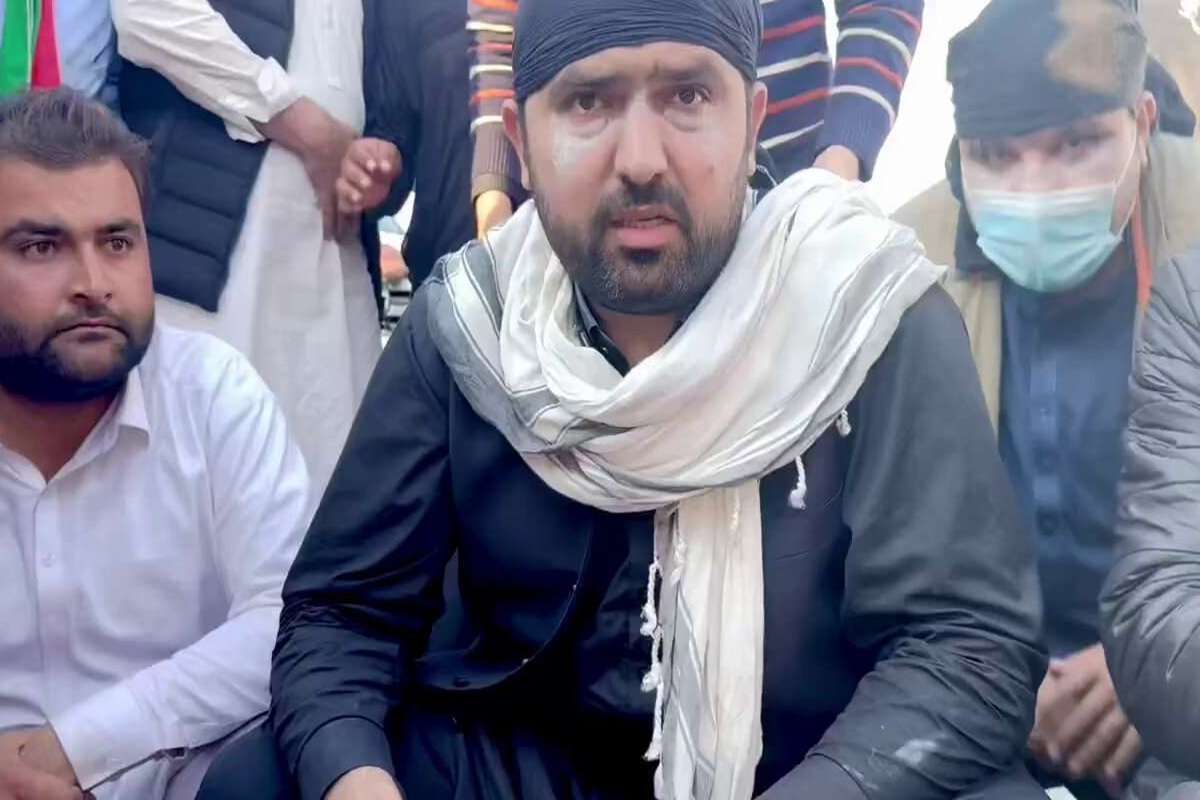
The Tribal Ideologue at the Helm
Muhammad Sohail Khan Afridi, the new chief minister of Khyber Pakhtunkhwa (KP), presents himself as a zealous disciple of Imran Khan’s philosophy. Hailing from the remote Khyber tribal district, he is the first person from the former Federally Administered Tribal Areas to hold KP’s top office. A Pakistan Tehreek-e-Insaf (PTI) loyalist since his student days, he was handpicked by Imran Khan to replace Ali Amin Gandapur in October 2025, explicitly because of his long-standing dedication to PTI’s ideology. In his inaugural remarks, the 36-year-old Afridi effusively thanked Imran for elevating “a person like me, from the middle class, elected as Chief Minister,” underlining that his legitimacy flows from Khan’s patronage rather than from his own record.
And, he has behaved accordingly.
When repeatedly barred from visiting the imprisoned PTI chairman, Afridi staged press conferences outside Rawalpindi’s Adiala Jail, railing against federal authorities and hinting at misconduct by the security establishment. He alleged that officials had “violated the sanctity” of mosques by using sniffer dogs during search operations, a claim clearly calibrated to inflame religious sentiment. Political rivals accused him of inciting the public and “seeking to undermine” the honor of the armed forces. Within weeks of taking office, Afridi had signaled that he sees himself less as a provincial administrator and more as Imran Khan’s ideological standard-bearer in KP.
Khyber’s Smuggling Economy
Afridi’s political instincts are rooted in the environment that produced him. He represents Bara Tehsil in Khyber District, a rugged border region whose economy has long thrived in the shadows. Formal opportunities are scarce; livelihoods have historically depended on cross-border trade, much of it illegal. The Khyber Pass, linking KP to Afghanistan at Torkham, is notorious as a conduit for smuggled goods, from electronics to auto parts, that routinely bypass customs.
Most damaging has been the Afghan drug trade, which has found a persistent corridor through Khyber. Members of the local Afridi tribe – including figures from the same broad clan as Sohail Afridi – have a “decades-long history of trafficking opium and heroin from Afghanistan,” according to law enforcement analyses. Together with Shinwari counterparts across the border, they have dominated key transit points at Torkham, forming what observers once called a “drug pipeline” through Khyber. One famous Afridi smuggler, Haji Ayub Afridi, even sat in parliament in the 1990s and built a $2 million mansion in Landi Kotal—an extravagant fortune in an area where most residents remain poor.
The paradox is stark. Khyber’s development indicators lag far behind the rest of Pakistan, but a handful of power brokers, enriched by illicit trade, wield disproportionate influence. The costs of this black economy are not confined to Khyber. Smuggling has hollowed out legitimate businesses and drained tax revenues. Narcotics from Afghanistan, the world’s leading opium producer, have fueled addiction and crime well beyond Pakistan’s borders. By 2009, the global trade in Afghan opiates was estimated at $61 billion, with a significant share moving through routes like Khyber. Over time, “a decades-long ecosystem of crime and patronage” evolved around the lax Pak-Afghan border, implicating tribal intermediaries, smugglers, and complicit officials on both sides. That system has not only stunted legal development; it has also provided oxygen to violent actors.
Militancy, Operations, and Persistent Neglect
The same geography that favors smuggling has nourished militancy. After 9/11, a range of extremist groups entrenched themselves in the tribal belt. By the mid-2000s, Bara and the adjoining Tirah Valley had become strongholds of warlords such as Mangal Bagh, leader of Lashkar-e-Islam (LeI). Khyber’s position – flanking Peshawar and astride an international supply line – made it both strategic and vulnerable. Attacks on NATO convoys and raids into Peshawar from Khyber forced the state to act.
In 2008, the first major operation against Mangal Bagh’s militia in Bara was almost farcical. Security forces entered with fanfare, only to find the militants gone. Bagh’s fighters had melted into the mountains; the “massive operation” amounted essentially to bulldozing abandoned compounds. The army even razed Mangal Bagh’s mud-house, and he reportedly received compensation afterward, a detail that captured the ambiguity of the campaign. Lashkar-e-Islam and allied outfits regrouped repeatedly in the years that followed.
It took the nationwide Zarb-e-Azb offensive, launched in North Waziristan in 2014 and later extended to Khyber, to disrupt these networks. LeI’s bases were bombed, and Tehrik-e-Taliban Pakistan (TTP) militants sheltering in Tirah were pushed into Afghanistan. Mangal Bagh fled and was reportedly killed in a 2021 counterterror strike. After a series of operations branded Khyber-1, Khyber-2, and Khyber-4, officials declared the area cleared and state writ restored, at least on paper.
The underlying conditions, however, barely changed. Decades of conflict had devastated an already fragile social infrastructure.
By 2011, only 17 percent of the population in the Federally Administered Tribal Areas was literate; among women, the figure was roughly 3 percent. More than 670 schools had been blown up by militants by the early 2010s, with Khyber among the worst-hit agencies. Health care, roads, water supply, and other indicators in these merged districts still trail far behind Pakistan’s mainstream. The army could clear territory, but civilian authorities failed to deliver credible governance. After the 2018 merger of FATA into KP, successive governments in Peshawar and Islamabad promised to prioritize the tribal districts. Progress has been uneven and slow. This is the landscape – scarred by conflict, dominated by contraband, and underserved by the state – from which Sohail Afridi has risen.
The Return of Terror – and Its Business Model
The relative lull in violence after 2016 has proved temporary. The Taliban takeover of Afghanistan in August 2021 emboldened Pakistani militants. The TTP, once fragmented and in retreat, reunited and launched a new wave of attacks across KP in 2022-2023, from North Waziristan and Bajaur to Swat and Peshawar. Khyber has again seen threats: attacks on police checkpoints, targeted killings of pro-state tribal elders, and masked men reappearing in remote valleys. Criticism of PTI’s handling of this resurgence contributed to Ali Amin Gandapur’s exit, and Afridi’s elevation is inseparable from this security crisis.
Both firepower and finance drive this re-escalation. Observers note that TTP’s arsenal today is more advanced than during its earlier insurgency. A central reason is access to weapons left behind in Afghanistan. When the United States withdrew, it inadvertently “boosted the military capabilities” of groups like the TTP by leaving modern arms in Taliban hands. Kabul denies supplying TTP, but reports indicate that American M4 and M16 rifles, night-vision goggles, sniper scopes, and similar gear have filtered into TTP units. “These weapons have added to the lethality” of militants, especially against KP’s lightly equipped police. One police officer in the province described how fighters with thermal sights can strike at night with near impunity, while ordinary constables lack even basic protective equipment.
Moazzam Jah Ansari, a former inspector general of KP Police, summed it up bluntly: extremists “picked up sophisticated weapons left behind by the Americans and waged war” against the police.
Guns alone, however, do not sustain an insurgency; money does!
The traditional smuggling networks of Khyber and the broader border belt are once again integral to terrorism’s business model. The TTP and associated groups have fused with organized crime, drawing revenue from the drug trade, kidnappings for ransom, protection rackets, and illicit movement of goods. Even before 2014, the TTP was funding itself through a mix of “extortion, kidnapping, smuggling, and charities from the Gulf.” That model has been revived and adapted. Drug traffickers along the frontier often have tacit arrangements with militant commanders. Militants offer protection or safe passage for narcotics convoys, and in return receive a cut of profits.
For young men in places like Bara, “jihad” is thus inseparable from a crude form of employment. Recruits are drawn by stipends for their families and the status that comes with a weapon and a gang, as much as by ideology. A study of settlements along the frontier found that more than 70 percent of households rely primarily on cross-border trade. When that trade is dominated by illicit goods, a large share of the population is directly or indirectly dependent on smuggling. Poverty, exclusion, and the normalization of crime become recruitment agents for militancy. This is the economic underbelly of terrorism in Afridi’s KP; too often, policymakers fixate on madrasas or foreign plots and ignore this domestic political economy.
Loyalty Over Governance
In such circumstances, KP needed a leader with administrative depth and the ability to tackle frighteningly complex problems. Instead, PTI has installed Sohail Afridi—a young loyalist whose central qualification is unquestioning obedience to Imran Khan. Afridi climbed through the ranks of the Insaf Student Federation and its youth wings, echoing Khan’s rhetoric, and was rewarded with a provincial assembly ticket in 2024. As chief minister, he has publicly acknowledged that he serves at Imran’s pleasure and under Imran’s direction.
In a revealing episode, Afridi wrote to the Chief Justice of Pakistan seeking permission to consult the jailed PTI chairman on “important governance matters.” He declared it his “constitutional and moral duty to seek directives from my party leader” on decisions like cabinet formation. That formulation, essentially presenting himself as a proxy for Imran Khan in the CM’s office, reinforced the impression that initiative and competence are secondary in his rule. At the same time, fealty and ideological purity come first. Critics are not entirely wrong when they say KP is being run by remote control from a prison cell.
The record of 13 years of PTI rule in KP is not inspiring. Afridi cannot be blamed for all of it, but he has chosen to own little of it either.
The security situation remains dangerous. Economic development has lagged. On many social indicators, KP is stuck near the bottom among provinces. The literacy rate hovers slightly above 50 percent, only modestly better than a decade ago and still trailing Punjab. Rural health facilities are understaffed and under-resourced. The province’s finances have deteriorated sharply, with widening deficits and salary pressures requiring bailouts from Islamabad.
Meanwhile, the party that denounced corruption has found itself embroiled in scandals. In 2025, investigators uncovered an estimated Rs. 40 billion stolen from various KP government accounts – “a mere glimpse of PTI’s financial malpractice,” according to one local report. That sum is roughly half of KP’s annual development budget.
More troubling still is the condition of KP’s frontline forces in the war on terror. Despite billions of rupees being formally earmarked for the police and Counter Terrorism Department each year, the forces still lack basics such as ballistic vests, modern weaponry, and forensic capacity. Some of this is due to national resource constraints, but there are persistent allegations that security funds were misused or diverted.
A sharply worded Khyber-based editorial asked: If the authorities cannot act against these criminal networks, then what is the purpose of this administration? The same piece accused the previous Gandapur government of having “mortgaged the province to terrorists and corrupt mafias,” with tax money ending up in the hands of “terrorists, Afghan proxies, and political opportunists.” The language is harsh, but it captures a mood among many in KP who see rising violence and stagnant services while PTI leaders wage political battles elsewhere.
Afridi has not broken from that pattern. He has invested his energy in fighting for meetings with Imran Khan and in denouncing perceived injustices against PTI. Still, he has offered little by way of a clear plan to revive KP’s economy or strengthen law enforcement.
Populism Over Performance
On style, too, Afridi resembles his predecessor.
Flamboyant performances and social-media theatrics marked Ali Amin Gandapur’s tenure. Afridi has not repeated Gandapur’s more scandalous episodes, but he has shown the same appetite for optics. Within weeks of taking office, he was featured in widely shared clips: offering prayers at a mosque with conspicuous zeal, eating Peshawari chapli kebab in a modest eatery, and having his foot measured for a pair of Kaptaan Chappals, the sandal associated with Imran Khan’s image. This content plays well with PTI’s base, projecting a humble, religiously observant leader. To critics, it signals another politician more interested in performance than in governing a province in crisis.
The gap between optics and reality is growing. Police in parts of KP are again engaged in nightly firefights with militants. Families in districts like Tank, Bannu, and Bajaur live under the shadow of terror, as they did in the mid-2000s. Traders in Peshawar have held strikes against rising extortion demands from militants. Inflation and unemployment have battered a province that has limited capacity to absorb economic shocks. The end of import concessions on Afghan trade has pushed up prices of everyday goods in KP markets. Development funds allocated for the tribal districts remain either unspent or stuck in bureaucratic limbo.
Yet Afridi’s energies appear focused on projecting piety and loyalty and on maintaining PTI’s narrative. A popular quip in the province claims that the only “development” under PTI has been the development of sophisticated public relations. It is an exaggerated line, but it is not entirely wide of the mark.
Keep It Constitutional – and Demand Better Politics
These failures have tempted some in Islamabad’s power structures to contemplate an extra-legal “solution” in KP: talk of Governor’s Rule or other mechanisms to remove the PTI government prematurely has surfaced more than once. That temptation must be resisted. Poor performance or confrontational politics do not justify subverting democratic norms. Pakistan’s history is littered with examples – from Balochistan in 2013 to Sindh in the 1990s – where dismissing elected provincial governments ultimately damaged the federation’s cohesion.
The correct response to KP’s predicament is a renewed commitment to the constitutional process. PTI won a mandate in KP and, uncomfortable as it may be for the federal coalition or the military, must be allowed to govern or fail within the law. Any forcible removal of Afridi’s government would feed PTI’s narrative of victimhood and deepen alienation in a province that is already sensitive to perceived disenfranchisement by the center.
Instead, mainstream parties need to rediscover KP through politics, not through the establishment. The Pakistan Peoples Party and Pakistan Muslim League-Nawaz, which dominate the federal coalition, have treated KP as peripheral for too long. They now have an opening to build serious alternatives. Their provincial chapters must reconnect with KP’s electorate, address local grievances, and offer concrete plans on security, jobs, and services. Early moves – PPP leaders visiting Swat and DI Khan, PML-N signaling cooperation with the secular ANP – need to deepen and broaden. By the next provincial election, KP’s voters should have a meaningful choice, not just a referendum on PTI versus the establishment.
Ultimately, the fate of Khyber Pakhtunkhwa lies in the hands of its people. Pashtun voters have shown repeatedly that they are willing to punish underperformers. PTI’s 13-year run, from Pervez Khattak to Afridi, has had ample time to deliver. Early police reforms were fundamental, but many structural problems remain unchanged. A recent opinion survey found that nearly half of PTI voters in KP felt there had been no development in their area during the past government. That is a sobering verdict from within the ruling party’s own base.
The questions now are brutally simple: Are lives in KP more secure or prosperous than they were in 2012? Have the sacrifices of soldiers and police been matched by honest governance? Or has a party that promised “tabdeeli” merely repackaged familiar patterns of patronage and decay?
Sohail Afridi’s rise, wrapped in tribal pride and piety, should not obscure the track record of the experiment he embodies. KP does deserve better – better than constables dying while their chief minister fights for social media relevance; better than youths who see smuggling or militancy as their main career path; better than grand announcements in Peshawar that never reach Bajaur or Kurram. The people of KP can demand this better future by insisting that Afridi’s government actually govern and, if it fails, by holding it accountable at the ballot box. Democracy offers a mechanism to correct course, but it requires voters to be clear-eyed and courageous.
In the end, the strange case of Sohail Afridi is a microcosm of Pakistan’s broader dilemma: the replacement of merit and performance with ideological loyalty and theatrics.
Afridi may yet confound expectations, but so far he appears to be a man promoted beyond his competence, confronting problems beyond his grasp. For KP, the stakes are unforgiving. If his government continues on its current path of drift and confrontation, the province risks sliding into an even darker phase of insecurity and economic ruin. That outcome is not inevitable. The federal center must respect constitutional limits, the opposition must offer a real alternative, and KP’s voters must remember that charisma is no substitute for safety, work, and justice.
The province stands at a crossroads. One path continues the spiral of militancy, corruption, and misrule; the other leads toward recovery and hope. It is up to all stakeholders – not least the chief minister in Peshawar – to choose the right path before time runs out.


